
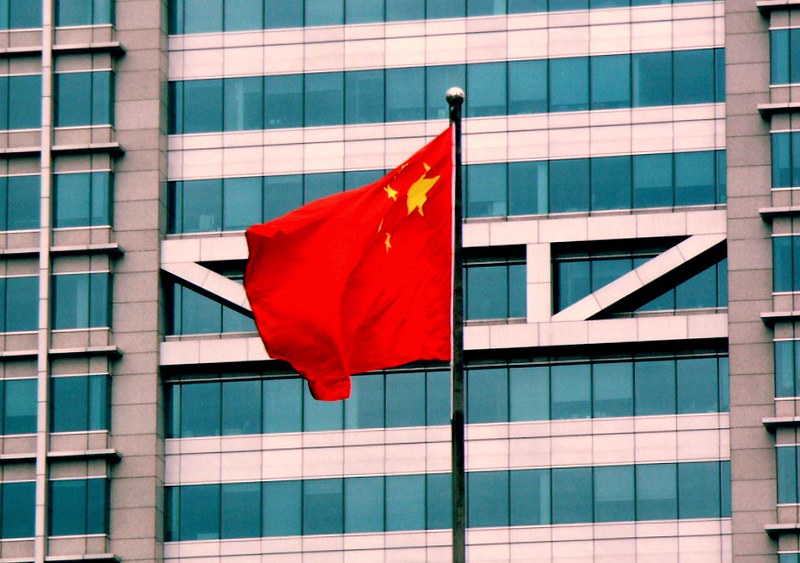
 “Socialism with Chinese Characteristics” (中国特色社会主义) is a clever phrase disguising the truth of the Chinese economy. In plain terms, China runs a capitalist mixed economy, like every other modern open economy that’s gotten rich. There was no other path to where they are today. Sweden and Germany lean more socialist in some respects than China does, and neither would ever call itself a socialist country. China is not a Marxist socialist economy by any reasonable definition. I’d struggle to say that phrase with a straight face. And yet thirty years on, people here repeat it without a second thought. That gap between the phrase and the reality is worth pausing on, because it says something bigger about how business gets done here.
You may have heard Paul and me say that Chinese people are all trained politicians, this phrase is a textbook example of what we mean. Read more on why your candidates are trained politicians. Here’s the thing: Chinese people like to see themselves as following a unique path, so “socialism with Chinese characteristics” was an easy sell. I’d call the economy something closer to rabid capitalism. When I arrived in China in August 1991, the country still ran on rice tickets, and the only real store in town was the 百货大楼 (the general goods building downtown). Then, in January 1992, Deng Xiaoping made his southern tour to Shenzhen and declared that Shenzhen wasn’t just an experiment, it was the model going forward.
Socialism with Chinese Characteristics? Really?
I wasn’t even aware of Deng’s trip at the time, but I didn’t need to be. Almost overnight, I noticed teachers at our school start selling products out of their first-floor windows. I could mention a product I’d seen downtown, and the next day that same teacher would have it in stock. The trains, for example, which used to run half-empty and sleepy, suddenly had no open seats. Everyone, it seemed, was now in business.
What nobody here calls it, ever, is capitalism. Adam Smith (father of capitalism) buried Marx (inventor of Marxist Socialism) in China, yet Adam’s name still can’t be spoken. This is quite an interesting contradiction.
This habit of saying one thing while meaning another runs deep, and it’s not just a matter of politics.
This absolutely shapes how Chinese people present themselves in a job interview. That’s why we look for candidates who’ve overcome that training; we find people who say yes and mean yes, who say no and mean no. These are the people who help you cut through the opacity that trips up so many foreign businesses here.
We commit to keeping double-speak out of your hiring process. That takes real digging, because candidates here can lie with a completely straight face in an interview, while the truth sits somewhere else entirely. So we start from a position of doubt, we question what we hear, then go verify it ourselves. That discipline is why we maintain a 96% success rate in placements that stick. Read on to learn the wisdom to our success.
